A Mind-Blowing Look at China’s Dialects**
If you thought “Chinese is Chinese,” this map will change your mind forever.
Most of us in India imagine that China speaks one single language called Chinese.
But when you look closely at the dialect map of China, you’ll notice something surprising — China is a land of many “Chineses,” not just one.
Yes, Mandarin may be the national language, but people across China speak entirely different dialects that can sound as different as Hindi vs Tamil, or Bengali vs Malayalam.
And the most interesting part? Many of these dialects are not mutually understandable at all!
Let’s dive in — simply, clearly, and with some fun curiosity.
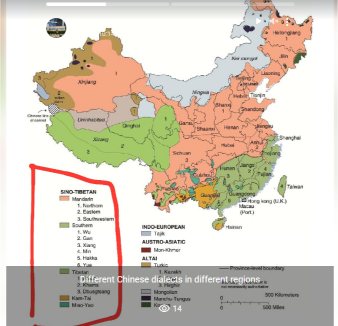
Mandarin is spoken mostly in northern and southwestern China.
This is the Chinese we hear in movies, news, and classrooms — the “official” version.
But here’s the twist:
Even Mandarin has three main varieties – Northern, Eastern, and Southwestern.
Move just a few hundred kilometres, and the accent, tone, and vocabulary start changing.
When you go down south, the story becomes even more fascinating.
China’s south is home to dialect groups like:
If Mandarin is like Hindi, Cantonese is like Tamil — same root family, but totally different in sound!
No wonder many Chinese people say:
“My grandmother speaks a dialect I cannot understand.”
Some dialect groups have spread beyond China:
This means that “Chinese culture” outside China is influenced by Southern dialects more than Mandarin — surprising, right?
China is huge, but the main reason is history.
For thousands of years, Chinese communities lived in separate valleys, river regions, mountains, and coastal areas.
Very little mixing happened.
So each region developed its own “version” of Chinese.
Just like in India:
China’s regions shaped their own Chinese.
The most mind-bending part?
They all use the same Chinese characters.
But when they speak, it sounds completely different.
Imagine writing the same Hindi sentence:
“मैं घर जा रहा हूँ”
And someone reads it as Tamil or Kannada in their own pronunciation — that’s how China works!
This unique system holds China together while celebrating its diversity.
If you’re learning Chinese for:
But if you’re a beginner, Mandarin is the best and easiest entry point.
Linguists often say:
“They are dialects only politically.
Linguistically, they are separate languages.”
That means each dialect group is actually a language family of its own.
China is like Europe inside one country — French, Spanish, Italian, Portuguese…
but all called “Chinese.”
Curious enough?
India loves diversity.
We have hundreds of languages, dialects, and accents.
China is the same — we just don’t hear about it often.
Behind the Great Wall lies a colourful world of voices, tones, stories, and traditions.
Next time someone says “Chinese,” you’ll know the truth:
There are many Chineses — each with its own heartbeat.
