“Is JLPT N1 easier, or is HSK 6 easier?”
People give dramatic answers.
Some say Japanese is impossible.
Some say Chinese is the hardest language in the world.
But the truth is much calmer and much more logical.
For most Indian learners, JLPT N1 is easier than HSK 6 — not because Japanese is easy, but because the exam structure suits how Indians study and think.
This article explains why, in very simple English, without exaggeration, and with real learner experience.
Reading comprehension
Grammar understanding
Vocabulary recognition
Listening comprehension
👉 No speaking. No writing. No interviews.
Advanced reading
Dense listening
Abstract vocabulary
Academic and opinion-based language
And if you take HSKK Advanced (which serious learners must):
Speaking
Summarising
Expressing opinions in Chinese
👉 This is a huge difference.
This single factor makes JLPT N1 feel lighter.
Indian education trains us well in:
Reading
Memorising
Objective questions
But we are not trained to:
Speak spontaneously
Explain abstract ideas orally
Perform under speaking pressure
JLPT N1 avoids this completely.
HSK does not.
Yes, Japanese uses kanji.
But exam-wise, it feels controlled.
Finite
Repeated
Predictable
Once you master JLPT N-level kanji, the exam feels familiar.
Larger range
Rare abstract words
Meanings change by context
Even at HSK 6, students feel:
“I know this word… but not this meaning.”
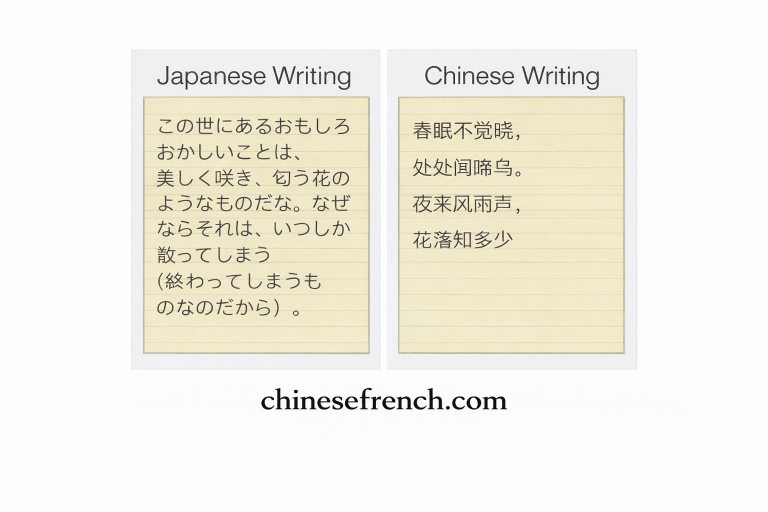
Large but bounded
Mostly formal written Japanese
You can realistically say:
“If I finish this list, I am safe.”
Academic
Literary
Idiomatic
Spoken + written mix
New words appear even for strong students.
Rule-based
Logical
Predictable sentence structure
Context-driven
Meaning-based
Flexible
For Indian learners who like rules and patterns, Japanese grammar feels safer.
JLPT listening:
Clear
Polished
Predictable traps
HSK listening:
Native speed
Dense meaning
One miss = confusion
Chinese listening tests mental stamina, not just language.
JLPT reading:
Long but logical
Clear conclusions
HSK reading:
Abstract
Opinion-heavy
Requires inference
Inference is harder than direct comprehension.
Japanese exam content:
Work
Society
Technology
Education
Chinese exam content:
Philosophy
Social behaviour
Abstract human concepts
Abstract themes increase difficulty.
Many compare JLPT N1 vs HSK 6, but forget:
👉 HSKK Advanced changes everything
You must:
Listen once
Summarise clearly
Speak confidently
Think in Chinese
JLPT never asks this.
Indian students are excellent at:
Recognition
Reading
Structured learning
JLPT rewards this.
HSK challenges this.
JLPT N1 is easier because it tests understanding.
HSK 6 is harder because it tests thinking.
JLPT N1 vs HSK 6 – Which Is Easier for Indian Students?
1. Skills Tested
JLPT: Reading + Listening
HSK: Reading + Listening + Speaking
2. Vocabulary
JLPT: Fixed
HSK: Expanding
3. Grammar
JLPT: Structured
HSK: Contextual
4. Speaking Pressure
JLPT: ❌ None
HSK: ✅ High
5. Indian Student Comfort
JLPT: High
HSK: Medium–Low
Final Box (Bold):
👉 JLPT tests recognition. HSK tests real usage.
I have cleared HSK 4, I am preparing for HSK 5, and I have also prepared for JLPT N4.
So this comparison is not theory — it is lived experience.
At HSK 4:
Vocabulary is manageable
Grammar is clear
Daily-life topics dominate
The challenge was:
Speed
Listening accuracy
But overall, HSK 4 feels stable and achievable.
HSK 5 suddenly introduces:
Abstract vocabulary
Long opinion-based sentences
Formal written style
Faster listening
The biggest challenge:
Words no longer translate directly.
I had to:
Stop translating into English
Start understanding meaning blocks
Increase reading stamina
HSK 5 demands thinking in Chinese, not just knowing Chinese.
JLPT N4 felt:
Structured
Predictable
Calm
Challenges I faced:
Kanji readings
Long grammar patterns
But once patterns were understood:
Practice improved scores very fast.
Japanese tests memory and structure.
Chinese tests cognition and flexibility.
For me:
JLPT felt mentally lighter
HSK felt mentally heavier
Without doubt:
HSK (especially moving toward HSK 5) feels harder than JLPT N4.
And extrapolating this:
HSK 6 will be much harder than JLPT N1 for most Indian learners.
If you like structured study, Japanese exams feel easier.
If you want real-world fluency, Chinese exams push you harder.
